Subscribe to the newsletter
SubscribeAcrylan
-

Where acrylic comes from?
Acrylic is a synthetic fiber made from acrylonitrile – an organic compound produced industrially. It is not a natural fiber, so its production takes place in factories using chemical processes. Acrylic was created as an alternative to wool: it is light, warm, soft and resistant to wear. Due to its properties, acrylic is widely used for knitting yarns, especially where easy care and durability are required.
How acrylic yarn is made?
1. Polymerization – acrylonitrile molecules are joined into long polymer chains.
2. Fiber formation – the polymer is extruded through fine openings, forming thin filaments.
3. Fiber strengthening – the fiber is cooled, stretched and stabilized to achieve the required structure.
4. Combing – the fibers are smoothed and prepared for spinning.
5. Spinning – the fiber is twisted into yarn, the thickness and twist density are chosen.
6. Finishing – the yarns can be softened, steamed, dyed in various colors.
Acrylic yarn properties :
- Lightness – the yarns are light, the knits do not weigh down.
- Softness – pleasant to the touch, often similar to wool.
- Warmth – retains heat well, suitable for winter knits.
- Wear resistance – does not pill, does not stretch, keeps shape for a long time.
- Easy care – can be machine washed, dries quickly.
- Hypoallergenic – contains no lanolin, does not irritate the skin.
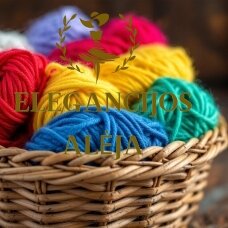
- Color variety – dyed in bright, long-lasting colors.
- Shape stability – knits do not shrink or felt.
-
Economical – often cheaper than natural fibers.
-
FAQ
Acrylic yarns are synthetic fibers created to imitate the properties of wool, but they are lightweight, soft, and easy to care for.
Acrylic is abrasion‑resistant, does not stretch, and does not deform, therefore knits remain long‑lasting.
Yes, acrylic is very comfortable to knit with: it does not pill, slides easily on needles, and forgives knitting mistakes.
Acrylic items are easy to machine‑wash, dry quickly, and require no special care.
Acrylic almost does not felt, so knits remain neat and smooth even after long wear.
Acrylic retains heat well, although it is not as warm as natural wool. It is a great choice for lighter and everyday knits.
Acrylic is used to knit sweaters, shawls, hats, scarves, children's clothes, blankets, and interior accessories.
Yes, acrylic is hypoallergenic and does not cause irritation, therefore it is suitable for babies, children, and sensitive skin.
Acrylic is light, soft, non‑allergenic, quick‑drying, and wear‑resistant. It is ideal for people who cannot wear wool.
Yes, acrylic is often blended with wool, cotton, or polyester to make knits softer, warmer, or more elastic.

 .
.