Subscribe to the newsletter
SubscribeAlpaca wool
-
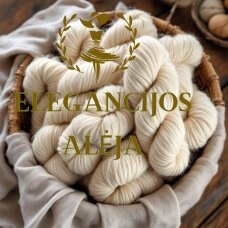
Where alpaca wool comes from?
Alpaca wool comes from alpacas living in the Andes mountains. The animals are shorn once a year, usually in spring, so that in summer they are without fleece and feel comfortable. Shearing is done safely, without harming the animal – it is a natural process similar to sheep shearing. The collected fiber is sorted by quality, softness and color.
How alpaca wool yarn is made ?
1. Fiber sorting – different wool qualities (Royal, Baby, Superfine) are separated.
2. Cleaning – dust, plant residues and natural particles are removed.
3. Combing – the fiber is smoothed, the direction is aligned, short hairs are removed.
4. Spinning – the fiber is twisted into yarn, the thickness and twist density are chosen.
5. Finishing – the yarns can be steamed, softened, dyed or left in natural color.
Alpaca wool yarn properties
- Softness – pleasant texture, does not itch, suitable for sensitive skin.
- Warmth – hollow fiber structure retains heat very well.
- Lightness – the knits are warm but light and do not weigh down.
- Hypoallergenic – the wool contains no lanolin, so it does not irritate the skin.
- Strength – the fiber is resistant to wear, less prone to pilling.
- Elasticity – holds shape well, does not stretch.
- Natural colors – more than 20 natural shades.
- Breathable fiber – maintains comfortable body temperature.
-
Durability – knits remain beautiful for many years.

-
FAQ
Alpaca wool yarn is a natural, exceptionally soft and warm yarn obtained from alpaca fleece. It is lightweight, smooth and luxurious.
Baby alpaca, Suri alpaca, alpaca blends.
Yes. It glides easily on needles and produces an even knitting texture.
Hand wash in cool water, use gentle wool detergent, avoid tumble dryers, dry flat on a towel.
It pills less than most natural wools and stays smooth with proper care.
Yes. Alpaca wool is approximately 3–5 times warmer while remaining breathable and lightweight.
Sweaters, cardigans, scarves, shawls, hats, lightweight warm garments and luxurious accessories.
Yes. Alpaca wool is naturally hypoallergenic because it contains no lanolin.
Alpaca wool is softer, lighter, warmer and hypoallergenic. It pills less and keeps its shape longer.
Yes. It is natural, biodegradable, and alpacas have minimal environmental impact.

 .
.