Subscribe to the newsletter
SubscribeWool
-
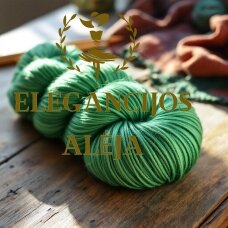
Where wool comes from?
Wool comes from sheep that are shorn once a year, usually in spring or early summer. Shearing is a natural and safe process that helps the animal feel comfortable during the warm season. The collected wool is immediately sorted by fiber quality, softness, length and natural crimp. Different sheep breeds produce different types of wool – from very soft merino to strong and coarser traditional wool.
How wool yarn is made?
1. Fiber sorting – the best parts of the wool are separated, unsuitable fibers removed.
2. Washing – the wool is washed to remove lanolin, dust and natural impurities.
3. Combing – the fiber is smoothed, the direction aligned, short hairs removed.
4. Spinning – the wool is twisted into yarn, the thickness and twist density are chosen.
5. Finishing – the yarns can be steamed, softened, dyed or left in natural color.
Wool yarn properties:
- Warmth – wool retains heat very well and warms even when damp.
- Elasticity – knits hold their shape well, do not stretch or sag.
- Breathable fiber – wool regulates temperature, prevents overheating.
- Moisture absorption – can absorb up to 30% of its weight while remaining dry to the touch.
- Strength – resistant to wear, durable, suitable for everyday knits.
- Natural crimp – gives knits fluffiness and volume.
- Presence of lanolin – natural fat that gives wool smoothness but may irritate sensitive skin.
-
Wide application – suitable for sweaters, socks, hats, coats, blankets.
-
FAQ
Sheep wool yarn is a natural yarn spun from sheep wool fibers. It is warm, elastic, and strong, making it ideal for knitting and crocheting.
Pay attention to yarn evenness, fiber softness, origin, and processing method. High-quality yarn does not pill or split while knitting.
Yes, especially medium-thickness yarn. It is elastic and glides easily on needles, making it comfortable for learning.
Thin yarn is suitable for lightweight garments, medium thickness for sweaters, and thick yarn for scarves, hats, and winter items.
Yes, sheep wool can felt if washed improperly. Felting is caused by heat, friction, and sudden temperature changes.
It is recommended to wash by hand in cool water, use wool-specific detergent, and dry flat to prevent stretching.
Sweaters, scarves, mittens, socks, hats, and warm winter garments are commonly made from sheep wool yarn.
For sensitive skin, sheep wool may be too coarse. In such cases, softer wool types or blended yarns are recommended.
Sheep wool is usually coarser than merino or alpaca wool, but it is very durable, warm, and holds its shape well.
“Superwash” sheep wool is specially treated to resist felting and is suitable for machine washing on a gentle cycle.

 .
.